XERF vs Ultherapy: Which Skin Tightening Treatment Is Better for Me?
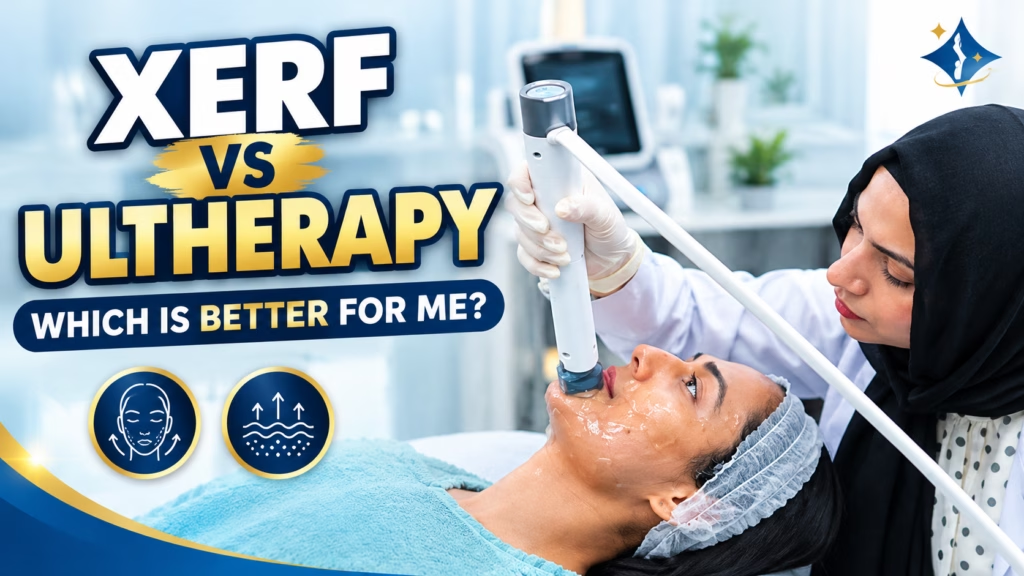
Table of Contents
Medically Reviewed by Dr. Rehana Bashir,
10+ Exp | GP Dermatology | MBBS + MOH UAE
Quick Answer: XERF vs Ultherapy
XERF and Ultherapy are non-invasive procedures meant to address skin laxity and tightness, but each of them employs unique technology. While XERF works through dual frequency monopolar radio frequency (RF), Ultherapy employs ultrasound with imaging. Not all patients require Ultherapy or XERF skin tightening monopolar as both methods are not necessarily better than one another. Instead, one needs to assess their facial features, skin laxity, objectives, medical background, budget and professional evaluation.
In case you have been thinking about better skin tightening in Dubai or Sharjah, compare the technology, studies, possible side effects and results before making a decision.
XERF vs Ultherapy: Key Differences at a Glance
Feature | XERF | Ultherapy |
Energy technology | Dual-frequency monopolar radiofrequency | Micro-focused ultrasound |
How energy is delivered | Radiofrequency energy heats targeted tissue | Focused ultrasound creates small zones of thermal energy at selected depths |
Treatment planning | Depends on the device protocol, applicator and practitioner assessment | Includes ultrasound imaging to help visualise tissue and treatment depth |
Main goal | Improve skin firmness and the appearance of laxity | Lift and tighten selected areas affected by skin laxity |
Treatment areas | Depends on the device’s authorised indications and the treatment plan | Depends on the device’s authorised indications and the treatment plan |
Comfort | Sensations vary by person and treatment settings | Sensations vary by person and treatment settings |
Recovery | Depends on individual response and treatment | Depends on individual response and treatment |
Results | May develop gradually; individual outcomes vary | May develop gradually; individual outcomes vary |
Cost | Depends on the clinic, area and treatment plan | Depends on the clinic, area and treatment plan |
Evidence | Published clinical evidence is emerging | Has a longer-established device-specific clinical evidence base |
In comparing XERF and Ultherapy, the very first thing that needs to be done is the identification of the underlying cause for the change in skin firmness. Dr. Swati Kadam, 12+ years exp. Aesthetic Dermatologist at Glow Aesthetics Dermatology Clinic, can provide insight on the factors that affect skin laxity, facial volume and individual treatment goals and help determine a suitable solution. The ultimate decision should be made based on an individual clinical assessment rather than a general statement about which technology is better than the other.
Important Note: This table compares the technologies, not the guaranteed results. Any differences in energy delivery cannot be considered as evidence of more effective lifting, longer-lasting effects or fewer side effects.
What Is XERF Treatment?

XERF is a non-invasive skin tightening procedure that employs dual-frequency monopolar radiofrequency. Its system provides energy at 6.78 MHz and 2 MHz in order to achieve controlled heating at various tissue depths.
Radiofrequency energy causes heating of the targeted tissues, which is expected to promote collagen contraction and remodeling.
XERF is not a laser, although some people look online under the term “XERF laser.” It is radio frequency.
The critical difference is between what a device is capable of doing in design and its actual clinical effect on the body. The technology provides evidence for the use of the treatment, while the size of the clinical benefit needs to be evaluated by clinical trials.
What conditions could be addressed with XERF?
Treatment may be used for the following concerns depending on the authorised indication and patient evaluation if:
- Skin laxity is mild.
- Skin firmness is reduced.
- Facial shape changes due to laxity.
- Some concerns in the jaw area or around the neck region where treatment is needed.
XERF is not a cure for every reason of ageing in the face. Skin laxity, loss of fat in the face, changes in facial bone structure, deep wrinkles, and muscles are different concerns. Treatment that helps in one case is not always helpful in all others.
What Is Ultherapy?
Ultherapy is a non-surgical procedure that uses micro-focused ultrasound to target controlled thermal energy to certain tissue depths. The Ulthera system also offers ultrasound imaging to visualize tissue while treatment planning and delivering energy.
An important distinction of this imaging feature is between Ultherapy and non-Ultherapy treatments based on the same type of imaging real-time visualization. It serves as a guide to the practitioner of the depth of the tissue and the depth of the treatment, however it does not give any assurances of a certain outcome or completely remove all risks.
Ultherapy is indicated in certain concerns for lifting and tightening that have been selected. It is best to determine what is appropriate based on the area to be treated, the level of laxity, and the anatomy of the person and their treatment objectives.
Like XERF, the potential mechanism is not a promise of a clinical outcome.
How XERF and Ultherapy are Different?
The two main differences lie in the way each device provides the energy to the tissue.
How XERF works?
XERF uses radiofrequency (RF) energy. It’s a dual-frequency energy system that shoots out 6.78 MHz and 2 MHz energy in one treatment pulse. The goal is to generate controlled heating in targeted tissues to stimulate collagen remodelling and make the tissues firmer.
All of this is important: The treatment plan, the applicator, the energy level and the practitioner’s technique. The frequencies do not indicate the level of improvement each person will receive.
How Ultherapy works?
With Ultherapy, the focused ultrasound energy is used to create small zones of thermal treatment at a selected depth. It has an imaging system which aids the practitioner in visualizing tissue and treatment placement.
It can be helpful in treating areas of the face. But still, it is dependent on the proper patient selection, technique of treatment and individual responses.
Is there a correlation between depth and lift?
No – for not everybody, not every concern is better with depth.
The treatment should target the tissue that is relevant to the problem being treated. Inappropriate treatment of the wrong area or inappropriate treatment approach may result in an unfulfilling outcome or risk.
Someone having a mild skin laxity experience may need different needs as compared to another person who has significant drooping and clear volume loss on the face. The practitioner should inform the patient which changes in the tissues are causing the concern before suggesting a device.
Must Read: How to Choose Skin TIghtening Clinic in UAE? Expert Insights
Compare XERF and Ultherapy for Jawline, Jowls and Neck Skin Tightening.
While both treatments can be considered for certain concerns including skin laxity, it is dependent on the cause of skin laxity.
Between the two jowls, which is the best?
Jowls can occur due to a variety of changes in the skin, fat distribution, deeper facial supportive tissues and changes in the facial skeleton with age.
If it is the skin’s looseness that is a primary concern, a non-surgical tightening procedure may be worth discussing. In cases where the jowls are primarily due to deeper tissue descent or volume loss, an energy-based procedure might help a bit.
It is important to not market XERF or Ultherapy as a sure cure for jowls. The clinician must determine the cause of the contour change before deciding on treatment.
What’s preferable for the jawline?
The answer will vary based on the type of concern: Loose skin, fullness under the chin, loss of definition or a mix of the above.
There is no guarantee that a treatment, which is focused on firmness, won’t cause a decrease in fat and the shape of the jaw will not alter. Your practitioner should be able to let you know which aspect of the concern the proposed treatment might help to tackle.
Which of the two is better for tightening necks?
Neck laxity may present as loose skin, changes in underlying tissues and prominent neck muscles. Not all of these concerns can be addressed in the same manner.
The practitioner should evaluate the neck on its own and not presume that a therapy that works well for the lower half of the face will be effective for the neck. Treatment area and instructions for the device should also be checked.
If you don’t have a full face, what should you do?
Before you decide on either treatment, notify your practitioner if you have a naturally thin face or if you have already lost facial volume.
The different goals are skin tightening and facial volume restoration. When designing a plan to increase laxity it is important to consider the volume you already have and not assume that it will be better if there is more.
Ask the practitioner how they will measure your anatomy, what will be the degree of change that they expect to achieve, and what other options are available if it is the loss of volume that you are concerned about.
One of the important questions that comes to mind is if the jawline problem is primarily due to the excess skin, loss of volume or alteration in underlying structures. These worries cannot be addressed in the same way. In her clinical review, Dr. Priya Kumari 10+ year in Dermatology & Aesthetics highlights the need for a thorough assessment of the root cause before proposing skin tightening procedure. Patients should be made aware of the change it is supposed to correct and that there are limits to the treatment.
XERF vs Ultherapy – Which one Works Better?
There is no universal solution which is applicable to all patients.
Results will vary based upon the cause and extent of laxity, the treatment area, the device protocol, the practitioner’s technique and the individual’s response. The proof supporting every gadget additionally must be taken into account.
What are the conclusions from the research on XERF?
There is emerging clinical research on XERF. In 2026, a prospective multi-centre study was carried out on 39 patients treated with two doses. It found that aesthetic outcomes were better at 30 and 90 days using clinician ratings. The study offers preliminary clinical data and conclusions on the durability and comparisons to other devices are limited by the sample size and duration of the study.
In a separate retrospective study of 16 women (2026) follow up was performed at 1 and 3 months after 1 treatment. The authors noted changes in facial measurements and assessment of skin quality, but said more large-scale prospective controlled studies are required.
These studies are just early findings, and do not prove that XERF is better than Ultherapy. They also do not set out to determine how each patient will react.
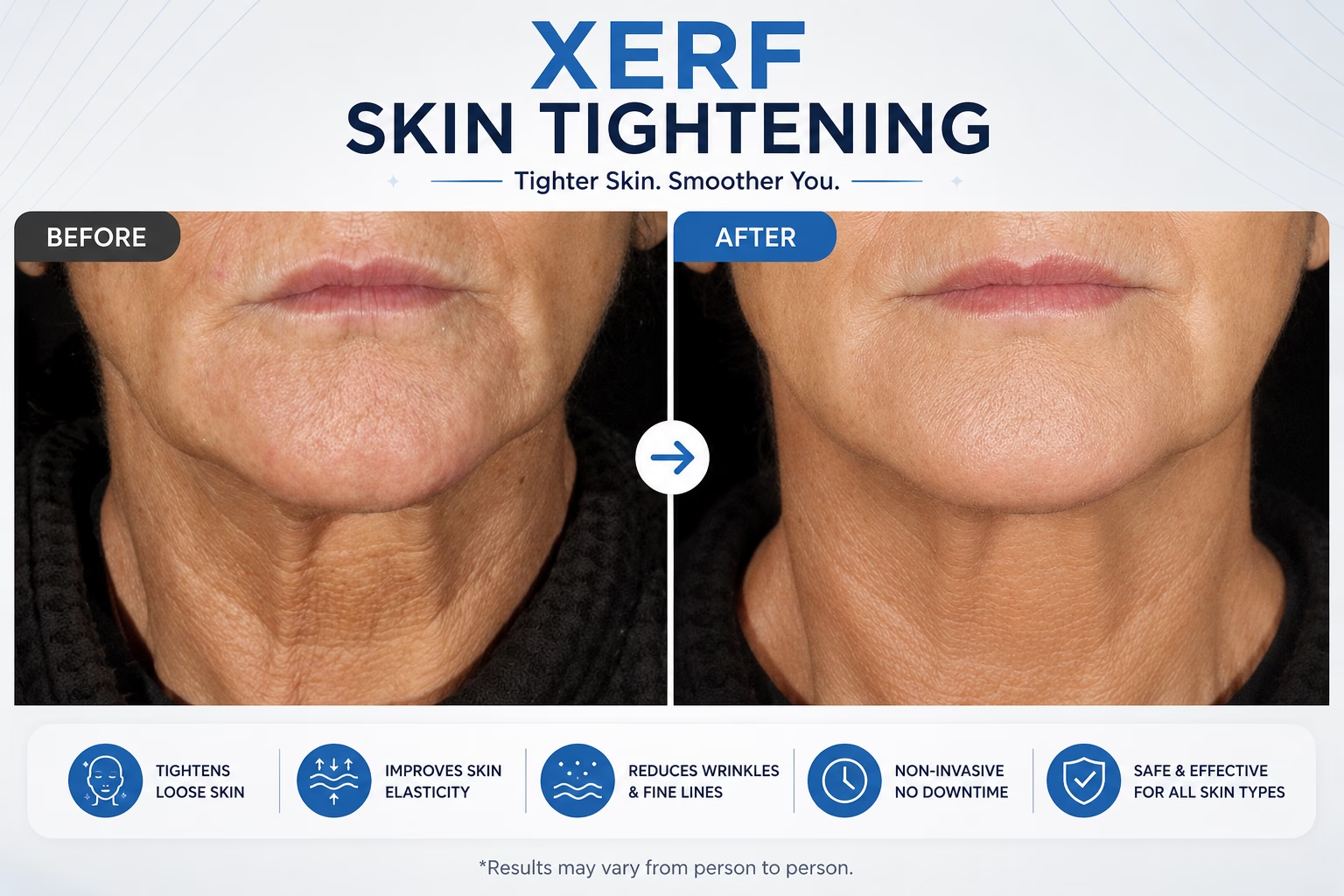
Must Read: XERF Before and After: Results Timeline, Photos, Benefits and What to Expect
What about Ultherapy?
There is a longer research history of the device used in Ultherapy. But it doesn’t guarantee a significant lift or guaranteed results for every patient.
The results from studies will vary according to the population, treatment protocol, area treated, outcome measures and the duration of the follow-up. Research with comparable results recorded over similar time frames should be used for a fair comparison.
What should you do when comparing before- and after- claims?
Search for photographs which were made under the similar conditions, where the treatment area and the period of follow-up are well defined. Discuss if the pictures are typical results or chosen examples.
Also question if the evidence is for the specific device recommended. Results from another radiofrequency or ultrasound device cannot automatically be considered to be the result of using XERF or Ultherapy.
Is XERF more painful than Ultherapy?
What is comfortable for one is not necessarily comfortable for another. This may vary based on treatment area, energy level, and personal sensitivity and application.
During this energy-based skin tightening treatment, there can be warmth, tingling, pressure or discomfort. Some people have a more comfortable treatment compared to others.
XERF doesn’t always hurt and Ultherapy does not always hurt. No one can predict how another person might feel based on their experience.
Before treatment is given to a practitioner:
- What does it feel like when you are in the procedure?
- If I feel uncomfortable, what can I do?
- How will the settings for the treatment be changed in a safe way?
- If I have unusual or extreme pain, what should I do?
Avoid assuming that if you’re not feeling as much pain it’s working better.
XERF vs Ultherapy: How Long Do Results Last?
Both treatments seek to make changes that can take a while to come, but that do happen.
There are three things to be noted:
- Immediate appearance: Skin’s appearance or feel immediately after treatment.
- Follow-up results: Results obtained at a later time (weeks/month).
- Durability: The percentage of the improvement that will be present in the long run.
It’s not the same result. Just because there is an early change doesn’t mean for a year or more.
The above published clinical studies for XERF extend to around three months. This is helpful to record early results, but is not necessarily a reliable long-term duration for any individual patient.
If comparing Ultheria to XERF, request a history of the results for a similar length of time. Don’t make statements about longer-lasting results, if the studies that back them up are of different design or duration.
Our practitioner should also discuss when results will be reviewed and whether or not there is any clinical rationale for further treatment. Do not automatically retest.
Is XERF more expensive than Ultherapy?
The expenses of each treatment will depend on the clinic, the region being treated, the proposed treatment plan and what’s included in the cost.
A quote should include the treatment plan, not just the headline price.
What affects the cost of XERF?
The price may vary according to:
- The area being treated.
- The difficulty of the treatment plan.
- The number of proposed sessions and the clinical rationale for these sessions.
- Assessment and follow up arrangements of practitioner.
- Whether consultation and review is included or not.
So what factors influence the price of Ultherapy?
The price may also depend on the treatment area, the treatment plan, the clinic and what services are included in the treatment. The cost of a smaller area should not be isolated and placed in comparison with a full face or face and neck package.
How to make a wise comparison of quotes?
When looking for a clinic, ask:
- What type of device will be used exactly?
- Which areas are included in the price?
- Is it a one shot or multiple shots?
- Does consultation and follow-up help are provided?
- Do you have any extra charges?
- What do you do if the outcome is not as apparent as you thought?
What’s the cheapest isn’t always the best. Likewise, a higher price does not mean that a treatment will yield better results.
Risks, Limitations and Who Might Need Another Option?
Non-surgical treatments may have side effects. XERF is not risk free and neither is Ultherapy.
Depending on the device, treatment settings, treatment area and the individual, potential reactions may occur. Common side effects of energy based therapy are mild redness, swelling, tenderness or discomfort. Burns, nerve-related symptoms or unwanted changes in facial contour are less common concerns that should be discussed in the context of the specific device and procedure.
None of the evidence to date is enough to conclude that all radiofrequency devices are alike or that all risks that occur with one ultrasound device is the same with another.
Facial volume is crucial for treatment planning. When it comes to hollowing, someone who has naturally thin cheeks will have different concerns than someone who is mainly concerned about skin laxity. Before a specific treatment is recommended, these factors should be evaluated by Dr. Lata Sajnani 14+ Year exp. GP Dermatology along with the medical history and aesthetic procedures that the patient has undergone. The possible risks, alternatives and limits of the expected result should also be discussed.
For which group should a more comprehensive evaluation be conducted?
Before treatment, a clinician needs to review your medical history, current skin condition, any precautions you should take for a particular procedure or device. Some medical conditions, electronic devices that have been implanted, open skin issues or other reasons may necessitate deferral or alternative, as directed by the device and clinical evaluation.
Discuss pigmentation issues, concerns about volume loss or previous complications if any from energy-based treatments during consultation.
Are there side effects of either treatment that lead to fat loss on the face?
Unwanted volume changes in your face should not be ignored, especially if you have a thin face, or are already worried about hollowing.
The risk depends on the technology, treatment settings, target tissue, anatomy and practitioner technique. Neither treatment is guaranteed to lead to fat loss, nor is fat loss impossible.
Inquire with our specialist at Glow Aesthetics about how they’ll determine your facial volume and the evidence behind their treatment strategy.
When is it appropriate to follow-up a treatment?
Follow clinic’s after care advice. If symptoms are worsening, not improving as suggested or new, please reach out to your treating clinician. If pain is severe, blistering, skin breakdown occurs or new weakness or other troubling symptoms develop, seek medical attention at once.
What is the Take from XERF and Ultherapy for me?
The best place to begin is NOT the device name. It is the concern that you wish to enhance.
These questions will help you to direct your consultation:
1. What is causing the change in my face?
Question if it is a loss of elasticity, a decrease in volumes or a combination of both.
2. What is the most possible improvement for my anatomy?
The practitioner should inform the client what the expected change is and the limits of treatment.
3. What do you think of this device?
Inquire about the mechanism of the treatment, and what evidence exists to back it up and make a recommendation.
4. What are the hazards in my instance?
Discuss medical history, skin condition, facial volume and previous aesthetic treatments.
5. What are the options available?
Depending on the cause and severity of the concern, alternatives may include another non-surgical treatment, a surgical consultation or no treatment.
6. How much is the total amount?
Ask for a specific treatment area, number of treatments and follow-up.
7. What will be our outcome measure?
Inquire about the timeframe for review and the way photographs or other evaluations will be used to determine change.
A qualified practitioner should be prepared to explain why a treatment might not be appropriate and not be recommending a device simply because it is available.
Final Takeaway
XERF and Ultherapy have different technologies to treat specific issues of skin laxity. XERF is delivered by dual-frequency radiofrequency and Ultherapy delivers micro-focused ultrasound with imaging. Both of them are not the best option for all faces.
Prior to making an investment in either treatment, determine the source of the concern, the potential benefits and pitfalls, and whether the recommendation is based on evidence. A well-planned treatment starts with an appropriate assessment—not a brand name.
For those looking to get treatment at Glow Aesthetics Dubai, schedule a consultation to talk about your worries, suitability, outcomes, dangers, and the expense of the treatment at the present time.
References
- Erlich G, Dahan E, Wolf Y. Objective and subjective retrospective evaluation of XERF, a novel single-shot dual-frequency non-invasive monopolar radiofrequency. Lasers in Medical Science. 2026. https://doi.org/10.1007/s10103-026-04996-0
- Weiss RA et al. Clinical Outcomes Following Dual-Frequency Noninvasive Monopolar Radiofrequency Treatment for Facial Laxity and Lower Face Lifting: A Prospective Multicenter Study. Cureus. 2026. https://doi.org/10.7759/cureus.104546
This article provides general educational information and does not replace an individual consultation with a qualified healthcare professional. Device indications and instructions may vary by jurisdiction and should be checked before treatment.
Medically Written Skincare Advice
 12+ Years Experience
5,000+ Patients Treated
Dermatology & Aesthetic Skin Therapist
 12+ Years Experience
Get Free Consultation Now!
+971 - 56 548 7001
Both is not necessarily better for all. XERF employs dual-frequency monopolar radiofrequency technology and Ultherapy is the micro-focused ultrasound with imaging. The better choice will depend on the cause and extent of laxity, area to be treated, anatomical factors, expectations, and evidence for the proposed treatment plan.
The Ultherapy uses micro-focused ultrasound, while No. XERF is a radiofrequency treatment. They vary in their energy transfer and treatment planning. Both seek to address specific issues of skin laxity, however, the technologies and clinical data should be considered independently.
Comfort depends on the person, treatment area, settings & treatment technique. Either procedure can be more comfortable to some, but there is no reason to offer a guarantee to the patient that XERF doesn’t hurt or that Ultherapy will always hurt more.
It depends on the reason for the jowls. Mild skin laxity can react differently to more severe instances of facial skin loss or skin sagging. A clinician should evaluate the cause of the distress and discuss what amount of change is likely to be achieved with each treatment.
The duration will not be the same for all patients. Outcomes vary based on individual, treatment and outcome measures. Compare studies of similar length, and ask your practitioner about what you can reasonably infer on the basis of the evidence on durability.
If unwanted facial volume changes are a concern, discuss it prior to undergoing energy based treatment. Risk is related to anatomy, treatment settings and treatment technique. Both treatments should not be called a guaranteed fat loss treatment, or a treatment that is completely incapable of fat loss.
The costs vary by treatment area, plan, clinic and services included. Request up-to-date rates and make sure it includes all of this. When advertising a price by a clinic outside the UAE, please note that it is not a price quoted by a clinic in Dubai or Sharjah.
Perhaps, but individual assessment of timing and appropriateness required. Your practitioner should be aware of when and where the treatment was administered, and which device was used, as well as how your skin reacted and if you still have any symptoms. Never double up energy-based treatments without a doctor’s advice.
If the patient has a thin face or has experienced some volume depletion, this should be discussed with them during the consultation. The process of tightening the skin is not the same as losing volume and incorrect plan can’t solve your primary problem. Inquire about the practitioner’s method for determining facial anatomy and explore all possibilities.
Verify practitioner’s credentials and experience, validate the device used, inquire about evidence and risks, and be sure to get a clear quote. A good consultation should involve having realistic expectations, alternatives and clearly having a follow-up plan, not just a promise of lifting.
How Long Does Botox Last? Results by Treatment Area