The Reality behind Permanent Skin Whitening Treatment- What Dubai Dermatologists are really saying?
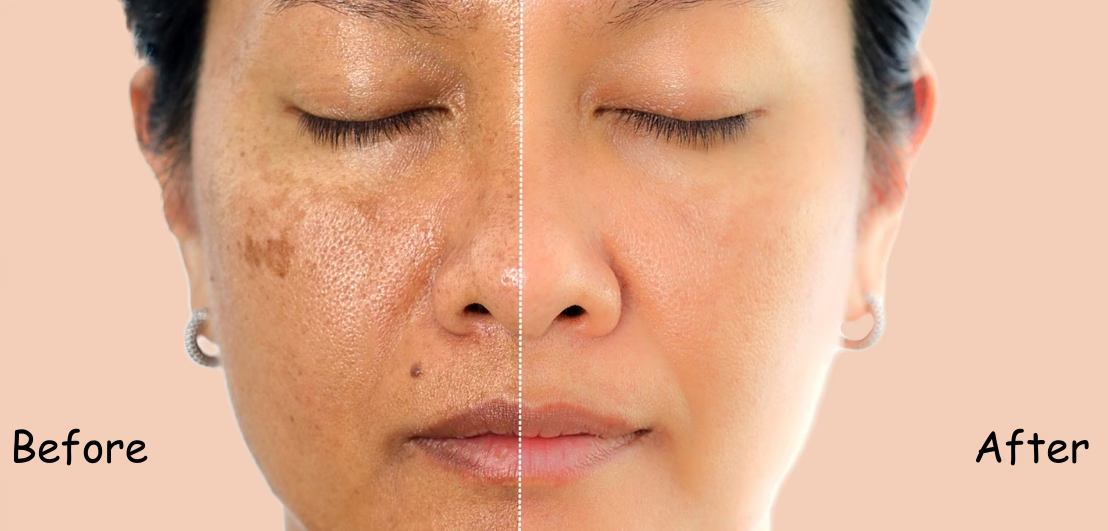
Table of Contents
Summary of the Article
This article contains all the information you need to know about whitening and brightening treatments on the skin that you can find in Dubai, what actually works, what is hyped and how to approach the issue of pigmentation in a safe way. Written in a truthful manner, in the opinion of a dermatologist. No magic binds on – only actual clinical wisdom.
Introduction
I would like to be outright with you upfront.
Permanent skin whitening is the phrase that is being searched thousands of times per month – I know why. Dark spots, asymmetrical skin color, and dullness are plaguing an enormous number of residents of Dubai and the fact that one wants to have a clearer and brighter skin is entirely understandable.
However, before I tell you about anything else, here is what you should understand before all: permanent skin whitening, that is to say, permanently altering the colour of your natural skin, is not something that dermatology is selling, or anything I would ever suggest trying to do.
Whatever is possible I do for my patients daily, is long-term want to correct the problem of pigmentation, which is hyperpigmentation, melasma, sun damage, dark spots, and uneven airing, as can be caused by environmental and hormonal factors. Quite another thing. And the outcomes can be truly life-altering like works as a immunity booster.
The Reason Behind Skin Darkening and Uneven Tone.
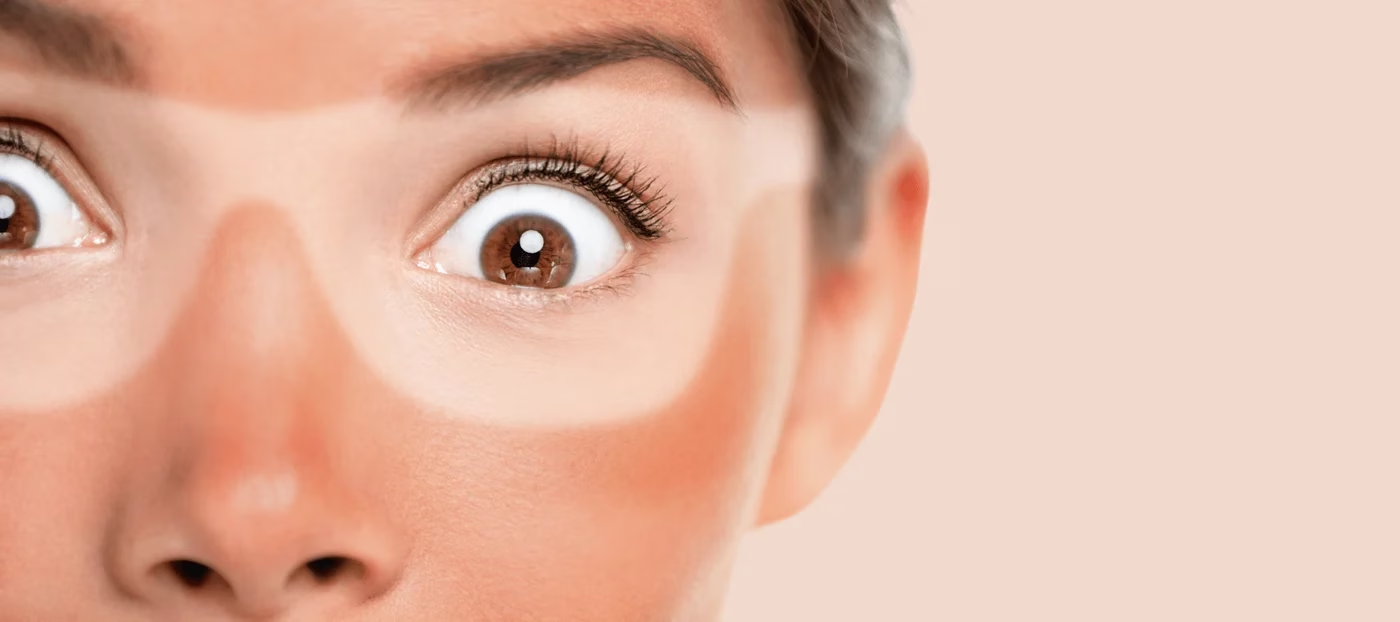
Dubai has one of the world skins challenging environments. The UV rays, the hot weather, sand and dry air are relentlessly attacking your skin barrier all year round. Combine that with excessive air conditioning, which dries out skin, and you have a formula of speeding pigmentation, aging, and an otherwise continually dull complexion.
Pigmentation that is hormonally driven is also very prevalent here. Melasma -the brownish spots that are so stubborn to get rid of, and are usually on the cheeks, upper lip, and forehead are found specifically in women, who usually get them during pregnancy, oral contraceptives, and change in hormones. I observe it in my clinic nearly every day.
Others are post-inflammatory hyperpigmentation (dark marks left behind by acne or skin trauma), sun damage over the years, and, unfortunately, sometimes improper use of skin-lightening products that contain mercury or high-dose steroids – which are still present in some markets. These cause short-term lightening followed by serious, long-term skin damage.
Luckily, pigmentation can be treated in clinically proven, safe and effective methods to produce long lasting skin brightening without damaging your skin in the process.
1. What it means clinically to have Skin Brightening?
The mechanism of action of skin brightening treatment is to address excess melanin – the dark spots and uneven-toned pigment. Various treatments have different penetration levels: some focus on the skin, others on the deeper dermis.
I have found the combination protocol in my clinical experience the most effective method of treating pigmentation, where you will combine treatments depending on your particular type of pigmentation, skin tone, and lifestyle. No one-fits-all magic solution is available.
2. Chemical Peels – A Good Place to Start.
Medical grade chemical peels, which apply acid solutions, glycolic, lactic, mandelic or TCA, to the skin, peel away the top layers of the skin, leaving fresher and smoother skin with an even tone underneath.
Peels are also one of the most effective and well-tolerated to provide surface-level pigmentation and dullness. They also enhance the synthesis of collagen that enhances the quality of the skin in the long run.
Practical steps:
Peels are normally performed in a course of 4-6 sessions.
- Minimal (superficial peels) to 5 to 7 days (medium-depth peels) downtime.
- Always use strict SPF use – never a bargain in the Dubai sun.
3. Laser Skin Brightening -Targeted and Effective.
Laser skin whitening for pigmentation is the strongest power that one can have in a dermatology clinic. The use of technologies such as the Q-switched Nd:YAG laser, fractional laser, and intense pulsed light (IPL) are based on disaggregation of melanin deposits in the skin without causing harm to adjacent tissues.
One of the aspects I like about laser therapy is its accuracy. We have the ability to apply to particular dark spots, sunspots or melasma areas and leave the rest of the skin untouched.
Who ought it to be considered:
- Patients whose pigmentation is stubborn and deep and not responding to topical medical care.
- The sun-damaged and age spots.
- Patients desiring a quicker more observable betterment.
Advantages: Non-operative, little to no downtime in most instances, and outcomes, which keep on getting better after a few weeks as the skin heals and regenerates.
4. Glutathione IV Brightening Therapy – What is It All About?
This is raised quite often. This is because of the popularity of Glutathione IV drips in the UAE that are aggressively marketed as a skin whitening solution.
My personal clinical opinion is as follows glutathione is a strong antioxidant that does not have no evidence of lowering the production of melanin in people who take it regularly. Cases of my patients exhibit a clear improvement in brightening with the IV glutathione treatment along with Vitamin C.
Yet – it is not a long-term solution on its own, the results are quite different among people and the quality control is crucial. This is not to be applied at unregulated wellness centres but only under medical supervision.
5. Medically Topical Therapy – Your Daily Home Protocol Counts.
There is no clinical treatment that is isolated. To achieve permanent skin brightening, home care program should be well-organized.
The most important ingredients recommend by our dermatologists:
- Vitamin C (L-ascorbic acid) – Brightens, protective and fades existing pigmentation.
- Niacinamide – Lowers melanin transfers and enhances the skin barrier.
- Alpha arbutin or kojic acid – Mild melanin inhibitors that can be used on a regular basis.
- Retinoid (tretinoin or retinol) – Increase cell turnover and dark spots disappear with time.
- SPF 50+ daily – The most crucial step in any pigmentation treatment program.
In the UAE, any gains made in treatments will go back within weeks without day to day sun protection.
6. How Not to commit Skincare Follies that increase Pigmentation.
I observe this everywhere. Patients who pay money to have therapies done at clinics, go home and apply the incorrect products to their skin or even worse use OTC skin-lightening creams that contain mercury or untested steroids.
What to avoid:
Any product that claims instant whitening – these nearly all have toxic substances.
- Forgetting to wear SPF (I cannot stress this enough)
- Excessively shedding delicate or already-weakened skin.
- Popping at post-acne spots- this greatly aggravates pigmentation.
7. When is good time to visiting a dermatologist?
When your skin discoloration is lasting (more than 3 months), spreading or not responding to over-the-counter treatments, please consult a qualified dermatologist before you waste more money on products.
In Glow Aesthetics Dermatology Clinic, we as a team of specialist dermatologists attend to patients with any type of pigmentation problem day in, day out in the UAE. Our philosophy is one of personalization since with several branches and thousands of patients under the care, it is always personalized depending on skin color, pigmentation type and lifestyle, among other factors, which treatment plan will actually work in your case.
What Are You Realistically Going to Get?
This is where I attempt to be as sincere as possible to my patients.
Most patients will observe: after an appropriate round of treatment- a combination of clinical procedures with the appropriate home care:
- Weeks 2-4: Clergy and less surface dullness of the skin.
- Month 2-3: Dark spots fade, overall tone is more uniform.
- Month 4-6: Noteworthy, sustained enhancement in skin brightness and texture.
When properly sun-protected and periodically serviced, results are long-lasting. Pigmentation will eventually come back, no matter what procedure was performed, without the use of SPF and lifestyle modification.
Also Read: How to Remove Tan From Face Fast?
Conclusion
This is what I want you to remember.
Permanent whitening of the skin – meaning permanently altering that which is your natural complexion – is not a dermatologically safe objective, and is one that no ethical practitioner should be promoting. But permanent fixing of pigmentation, evenness of tone, dark spots, and sun damage? And that is totally possible with the correct clinical attitude.
The best skin brightening regimes are a combination of laser treatments, chemical peels, topical medications and, last but not least, vigilant sun protection. No easy way. However, the outcomes, when it is treated well and in a patient manner, are truly worth it.
In case you are willing to learn about your skin the right way and go on a regimen that can truly help, begin with a free consultation dermatologist appointment. It will save you time, money and skin.
According to this Source:
Medically Reviewed Skincare Advice
 12+ Years Experience
5,000+ Patients Treated
Dermatology & Aesthetic Skin Therapist
 12+ Years Experience
Get Free Consultation Now!
+971 - 56 548 7001
Not to permanently alter your natural skin color. Nevertheless, it is undoubtedly possible to permanently or long-term correct pigmentation defects, such as dark pigment, melasma, and uneven tone due to sun damage or hormones, by using clinical correction and with the help of adequate maintenance.
No one treatment is the best one, as it will vary according to your pigmentation type and skin tone, and the depth of discoloration. A multidisciplinary method that incorporates laser therapy, chemical peels and medicated home care is usually the most thorough and permanent. To decide the course of action, a dermatologist evaluation is vital.
In cases of appropriate medical care and the use of pharmaceutical grade products, glutathione IV therapy is safe. It must not be carried out in unregulated centers. The outcomes are not permanent and differ among individuals unless they are maintained through sessions.
The majority of patients can feel improvement in 2-4 weeks. Major, observable outcomes are usually achieved in 2-3 months of regular therapy and home management. Complete course results can take 4-6 months.
Yes-unless sun protection is maintained on a regular basis. Daily SPF 50+ is necessary in the climate of Dubai in order to maintain the effect of treatment in the long run. It is also possible that hormonal pigmentation such as melasma reappear with hormonal fluctuations and that is why it is suggested to continue maintenance and annual check-in with a dermatologist.