Hydrafacial 5 Steps Explained: What Happens During the Treatment?

Dr. Swati Kadam
Dr. Swati Kadam is an expert Aesthetic Dermatologist certified by DHA with more than 12 years of experience in dermatology and aesthetics. She treats skin rejuvenation, acne scars, pigmentation, laser treatment, and customized skin care.
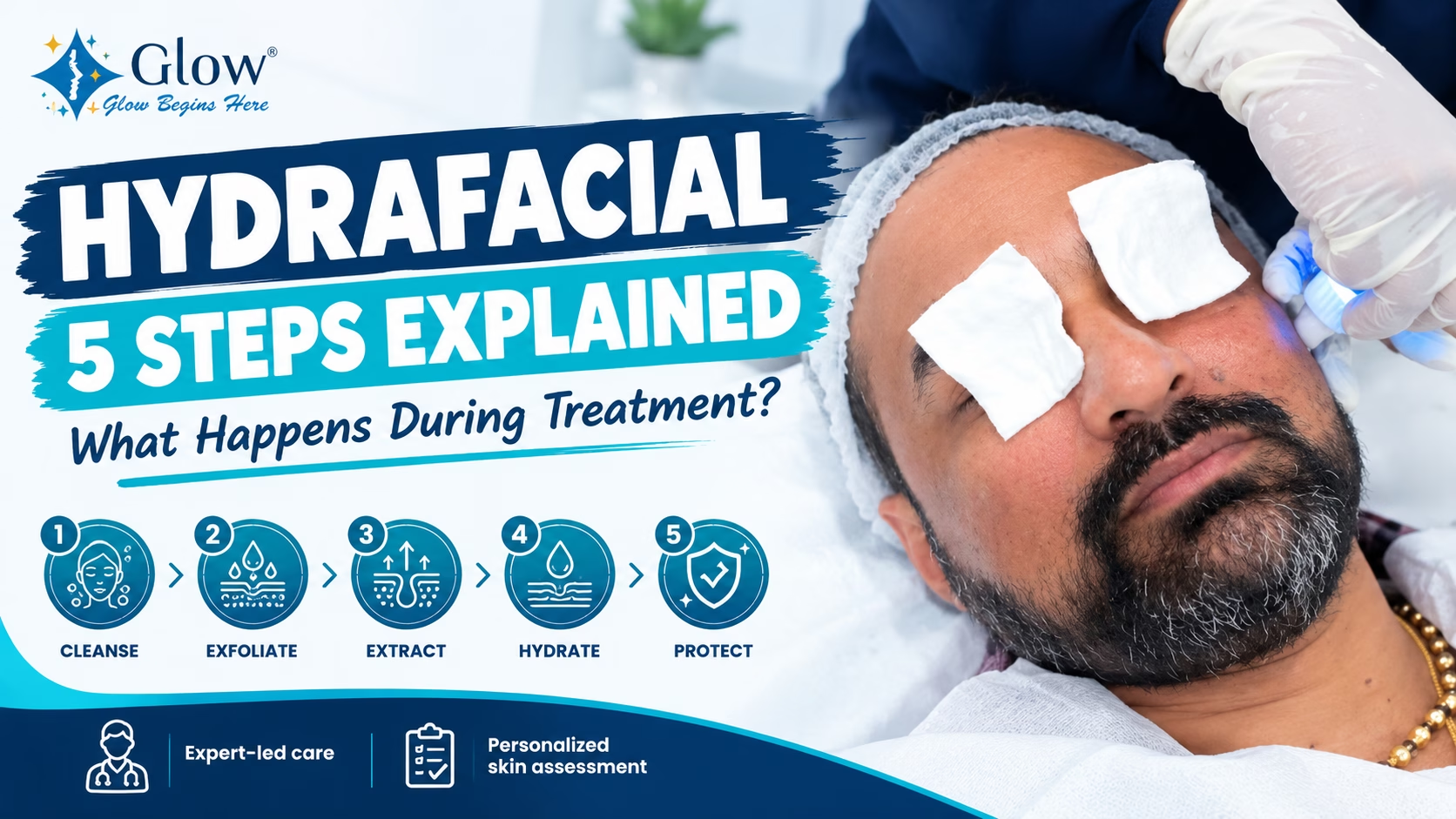
Table of Contents
Summary
Typically, a Hydrafacial is performed in five straightforward steps: cleansing, exfoliation, a mild acid peel, non-invasive extraction application of antioxidant and LED therapy can also be added as a final step. The whole process will take 30 to 45 minutes and the treatment will help to clean, hydrate and nourish your skin without causing any downtime. These steps can vary and be customised depending on your skin concerns.
How HydraFacial Treatment Works Explain by Dr. Priya Kumari
As an Aesthetic Dermatologist with 10+ years of experience, it is important to note that in Dubai HydraFacial is not just cleaning the dirt on the surface of the face. It includes several steps such as exfoliation, cleansing of pores, extractions, and hydration. Each stage serves its own purpose, and the treatment needs to correspond to the particular patient’s skin condition.
At the consultation stage, the specialist needs to identify whether there is an excessive amount of acne, oil, dryness, sensitivity, pigmentation, skin irritations and other issues. This information is needed to determine the appropriate level of exfoliation, the right type of solutions, and additional treatments.
During the extraction stage, controlled suction removes part of the pore debris and excess oil. Hydration allows delivering skin conditioning ingredients to moisturize the skin and make it smooth. However, HydraFacial cannot remove all blackheads and eliminate all causes of acne.
Those patients who have irritation, inflamed acne, and a damaged skin barrier will require a different approach and, probably, additional consultations. Deep acne scars, significant pigmentation, and persistent acne may also require other treatments.
The idea is to choose the most appropriate treatment for each skin problem.
Why are These HydraFacial Steps Important?
Many people look for Hydrafacial steps as a way to find out what they can expect prior to having their first treatment. Some people are afraid that the process will be painful or they will have to get needles. Still others are interested in its benefits for oily skin or acne, pigmentation or dull skin.
The great thing is that a Hydrafacial is normally a non-invasive and comfortable treatment. Understanding each step will also give you an understanding of how the treatment works and what results you can expect from it.
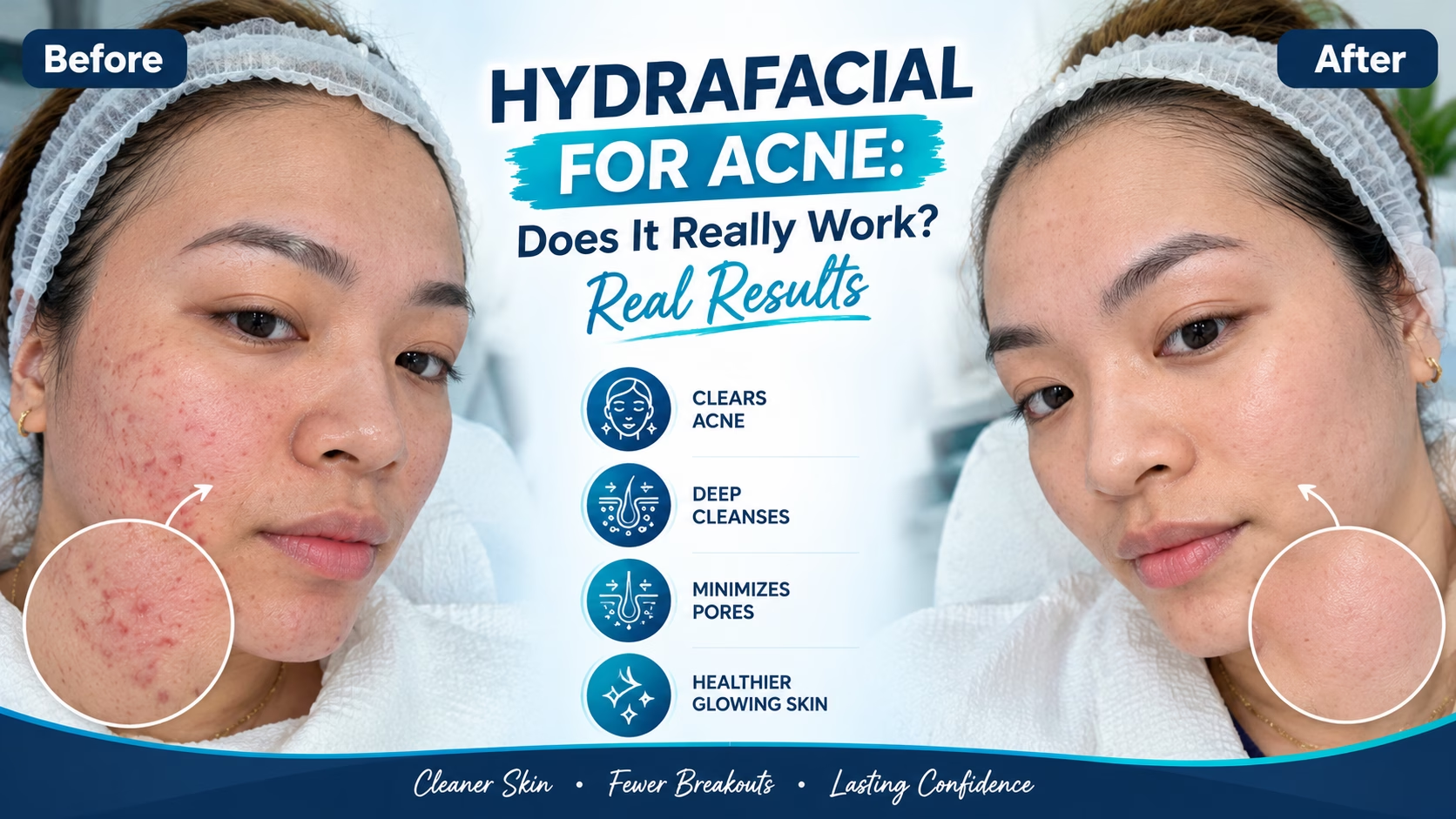
Also Read: HydraFacial for Acne: Does It Really Work? Dermatologist Guide + Real Results
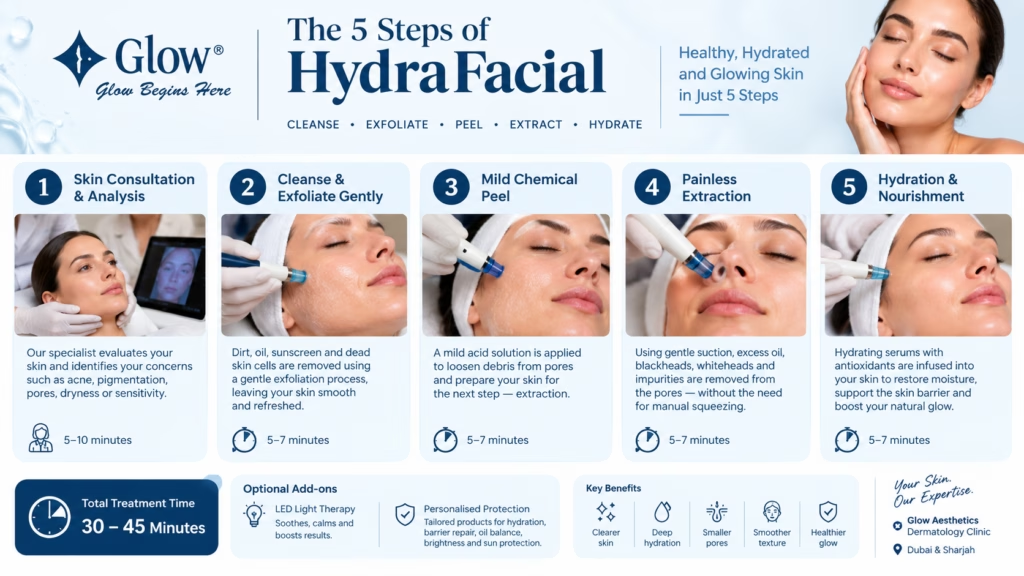
What are the 5 steps of the Hydrafacial?
Step 1: Skin Consultation and Analysis
All professional Hydrafacial treatments should start with a skin evaluation.
Prior to initiating treatment, the aesthetic dermatologist or skin care specialist will check your skin for any concerns, including:
- Oily skin
- Dry skin
- Acne-prone skin
- Hydrafacial for Pigmentation
- Enlarged pores
- Sensitive skin
- Fine lines
This evaluation enables treatment to be tailored to your skin’s needs.
Step 2: Cleanse and Exfoliate Gently.
Dirt, oil, sunscreen and dead skin cells are removed in the first treatment step.
Gentle exfoliation helps to break down skin debris, and makes it easier for later skin care treatments to be absorbed.
Most people notice smoother and cleaner looking skin almost immediately after this step.
Step 3: Mild Chemical Exfoliation.
A mild scrubbing solution is used to dislodge debris within the pores, but not too harsh.
This step is intended to refresh the skin without downtime, whereas medical chemical peels aim to clear up the skin. It will help in the preparation of the clogged pores for the ease of extraction process.
Step 4: Painless Extraction
The answer is to gently pull some excess oil, blackheads, whiteheads and impurities out of the pores Using gentle suction.
The extraction process is generally less uncomfortable than squeezing it out by hand and will help to clear congestion from the pores, leaving them cleaner.
Oily skin is one of the primary factors people opt for Hydrafacial.
Step 5: Deep Hydration and Skin Nourishment
Hydrating serums that contain moisturizing and antioxidant elements are pumped into the skin.
The ingredients work to support the skin barrier, hydrate the skin and add a soft and healthy feel to the skin following treatment.
Personalized Skin Protection.
Our facial therapist will end the treatment with products that support depending on the state of your skin:
- Skin hydration
- Skin barrier repair
- Oil balance
- Brightness
- Sun protection
All patients receive individual post-treatment recommendations as well.
Must Read: What are the Benefits of HydraFacial?
Add on LED Light Therapy
LED light therapy is an option for relaxing skin post-HydraFacial. It provides an effect that helps soothe the skin and increase the effectiveness of the treatment without causing any pain or side effects. Red light ensures that your skin looks fresh and even, whereas blue light is preferred by people with mild acne who doesn’t require acne treatment by specialist.
What is the time duration of each step in the Hydrafacial?
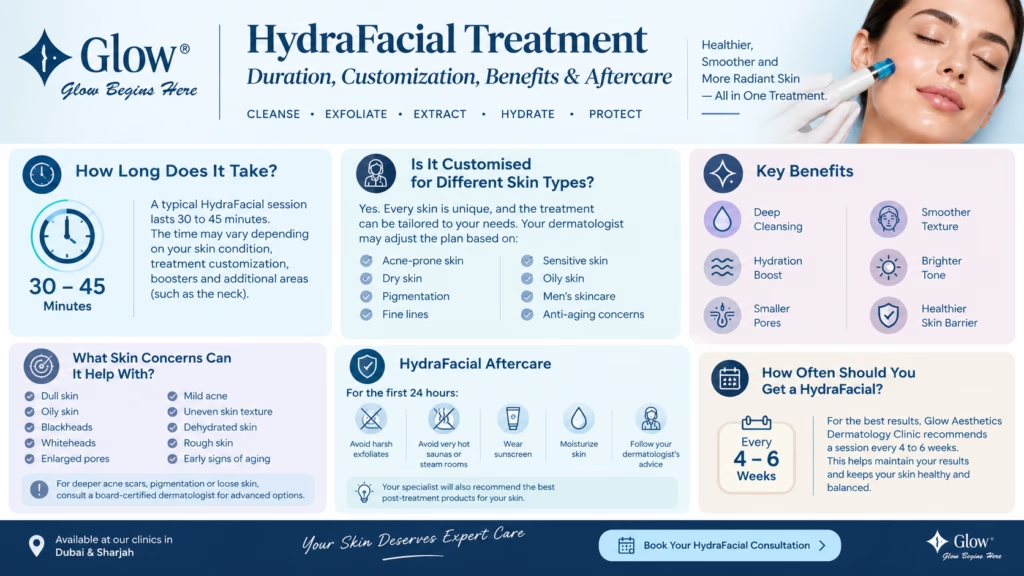
An average Hydrafacial session should last 30-45 minutes.
Treatment time may vary depending upon:
- Skin condition
- Customization
- Additional boosters
- Neck treatment
- Combined procedures
The vast majority of patients are back to work or normal activity right after the surgery.
Also Read: How Long Does HydraFacial Lasts? Results & Recovery
Does every Hydrafacial follow the same steps?
The basic treatment is the same as the Hydrafacial but can be tailored to individual needs.
The dermatologist might make adjustments to the treatment plan depending on:
- Acne-prone skin
- Dry skin
- Pigmentation
- Fine lines
- Sensitive skin
- Oily skin
- Men’s skincare
- Anti-aging concerns
Also Read: Regular Facial vs HydraFacial Which is better for me?
What skin concerns can be addressed with the steps of Hydrafacial?
The treatment can help to improve:
- Dull skin
- Oily skin
- Blackheads
- Whiteheads
- Enlarged pores
- Mild acne
- Uneven skin texture
- Dehydrated skin
- Rough skin
- Early signs of aging
- Face skin pigmentation
But if acne scars are deeper, pigmentation is marked, and there is some loose skin, then it’s time to seek assistance from board certified skin specialist like Dr. Khushbu Bisham have a Glow Aesthetics Dermatology Clinic.
Hydrafacial Aftercare
For the first 24 hours:
- Avoid harsh exfoliates.
- Avoid very hot sauna or steam rooms.
- Wear sunscreen.
- Moisturize skin.
- Take care as directed by your doctor.
Also Read: Is Hydrafacial Worth it? Price and Results by Glow Specialist
Dr. Swati Kadam, who is an expert in the field of Aesthetic Dermatology
It’s important to remember that in the skin care world, the extraction is the part of the treatment that the patients are most likely to remember. However, each stage of a Hydrafacial is crucial to its success and must be customized to each individual’s skin type, rather than applied in the same manner to everyone.
Conclusion
Hydrafacial is much more than just a facial, it’s a skin treatment that consists of a sequence of cleansing, exfoliation, extraction, hydration and nourishment of the skin with one facial. When you know what to expect from every step, you’ll better understand the value of the Hydrafacial treatment process and how it will help you enjoy healthier, smoother, better hydrated skin. The best outcome is achieved by selecting a qualified dermatologist, who will tailor the treatment to your skin issues.
Frequently Asked Questions
- What are the steps of Hydrafacial?
Typically, a Hydrafacial treatment includes an assessment of the skin, a thorough cleansing, exfoliation, soft extraction and moisturization using nourishing serums. Some clinics offer special finishing products tailored to the client’s specific skin issues.
- What is the duration of each step in a Hydrafacial?
5 to 7 Minutes per steps. The time of full Hydrafacial treatments is about 30 to 45 minutes. The duration of the steps will vary according to skin type, treatment customization, booster used, etc.
- Which Hydrafacial step removes blackheads?
Gentle suction technology will extract blackheads, whiteheads, excess oil and impurities. It’s meant to purify out the pores, yet not hard squeeze them.
- Does the Hydrafacial extraction hurt?
Patients don’t find Hydrafacial extraction to be painful, they find it very comfortable or slightly noticeable. This treatment is well tolerated and non-manual squeezing is not used.
- Are there any HydraFacial options to customize?
Yes. The dermatologist may tailor the treatment depending on the characteristics of the skin, such as oily, acne-prone, pigmented, dry, sensitive or prematurely aged.
- What to expect right after Hydrafacial?
The majority of people feel a difference in their skin immediately after the treatment, and don’t experience any downtime.
- Does Hydrafacial help with acne?
Hydrafacial can be helpful for those with mild acne, oily skin, and clogged pores. But, in case of moderate or severe acne, other treatments are also required along with Hydrafacial.
- Should I cleanse my face after getting a Hydrafacial?
Most dermatologists advise their patients to cleanse their skin at least the next day or as per their individual instructions regarding after-care.
- How frequently should you undergo Hydrafacial treatment?
Glow Aesthetics Dermatology Clinic Specialist suggest having a Hydrafacial once every 4 to 6 weeks.
- Who should have a Hydrafacial treatment?
Most people who are having dull skin, oily skin, clogged pores, acne, uneven skin texture, dehydration, or early signs of aging are potential candidates for Hydrafacial.
Medically Reviewed Skincare Advice
 12+ Years Experience
5,000+ Patients Treated
Dermatology & Aesthetic Skin Therapist
 12+ Years Experience
Get Free Consultation Now!
+971 - 56 548 7001