Trusted Laser Treatment Clinic in Dubai & Sharjah:
11 Things Patients Should Check Before Choosing (2026 Guide)
Table of Contents
Quick Read Summary
Finding the right laser treatment clinic in Dubai or Sharjah can be confusing. The top laser treatment centers emphasize patient safety, dermatologist supervision, FDA approved technology, personalized treatment plans, infection control and patient expectations. Before deciding on a clinic, patients should check the qualifications of the doctors, the quality of the laser machines, how the clinic conducts their consultation, the results achieved before and after the procedure, and the management of complications.
Introduction
Laser treatments are one of the most sought-after dermatology and aesthetic procedures today. Laser treatments for acne scars, pigmentation, Laser hair reduction, anti-aging, skin rejuvenation, and skin lightening with laser are extra popular in urban areas like Dubai and Sharjah, where patients are turning to laser treatments as a more appealing option.
But for one thing, the one most problematic issue for patients is how they can be sure that they are at a safe and qualified laser clinic near me.
Dubai’s Top Laser Clinic 2026 by Expert Guide
- Glow Aesthetics Dermatology Clinic – Al Barsha
- Premium Cosmetic Laser Center
- Glow Aesthetics Dermatology Clinic – Sharjah
- DE NOVA Laser Cosmetic Center
- Gentlemax clinics
- Glow Aesthetics Dermatology Clinic – BurJuman
- Derma Rose Clinic
- Royalty laser cosmetic center
- StyleAge Clinic
- Medrose Medical Center
Best affordable laser hair removal in Dubai? Any recommendations please
byu/WriterEducational138 inUAE
Comment
byu/WriterEducational138 from discussion
inUAE
The results of research found on the internet will display:
- aggressive marketing claims
- unrealistic promises
- confusing technology names
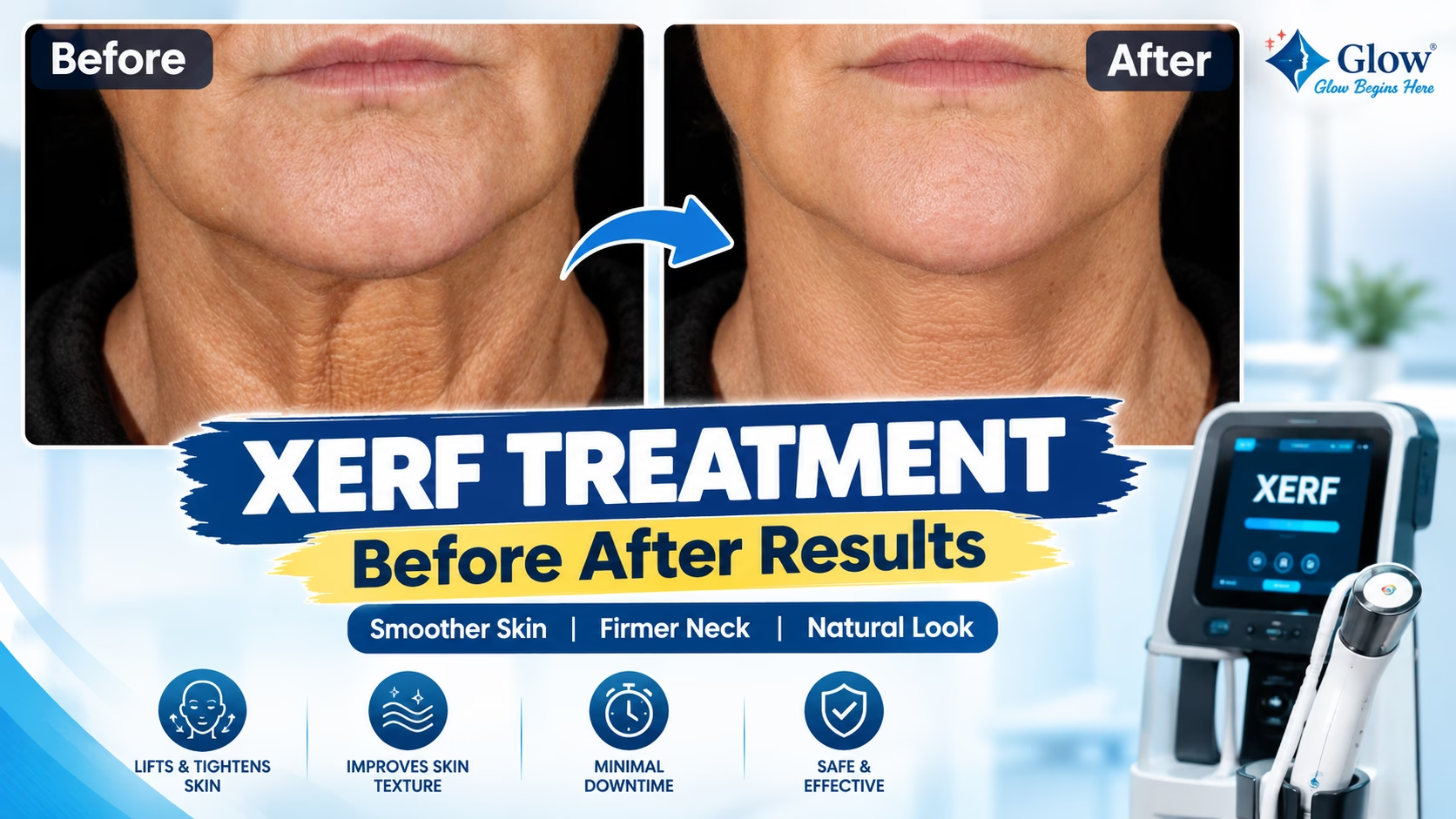
- The images in the gallery are heavily retouched before and after photos.
This confuses patients in making their decisions.
The reality is laser treatment results are far more related to more than just having a high-tech machine. Safety and results can be considerably influenced by the expertise of the dermatologist, quality of technology, the evaluation of skin type, hygiene standards, as well as customized treatment planning.
Some of the potential risks of choosing a provider that is not qualified is that laser procedures could result in:
- burns
- pigmentation
- scarring
- prolonged redness
- uneven results
- worsening skin conditions
This guide will help patients understand the 11 critical factors they need to understand before selecting a laser treatment clinic in Dubai or Sharjah. The function of this is not to endorse or promote a particular clinic but rather empower patients to make informed, safer decisions based on evidence.
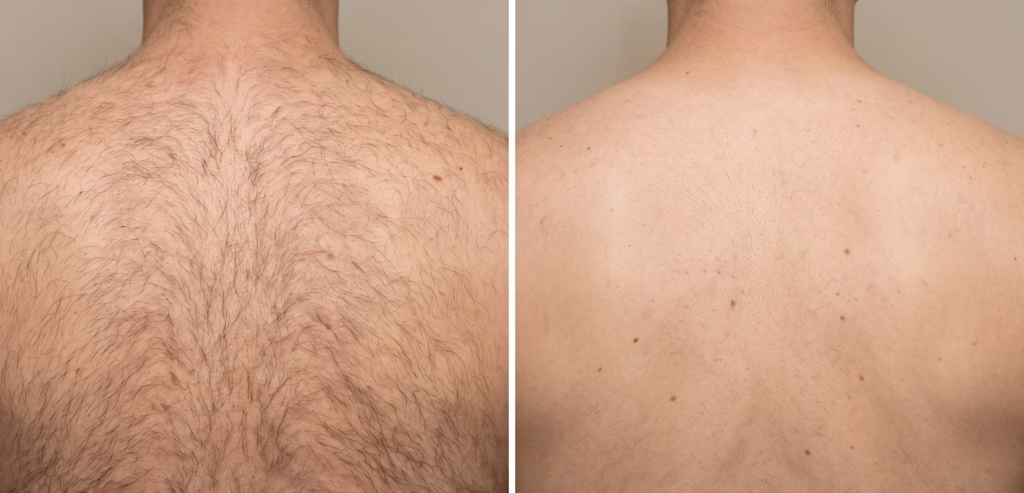
Laser Treatments Are A Relatively New Innovation In Cosmetic Surgery.
Laser treatments are based on the principle of focusing the energy in the form of light on specific structures in the skin. The wavelengths are different for various concerns, such as:
- Skin pigmentation
- acne scars
- wrinkles
- vascular lesions
- unwanted hair
- skin texture irregularities
Some lasers peel the affected layers of skin, others trigger growth of collagen in the lower layers of skin.
As each skin condition is unique, the success of the treatment will depend on the right technology and treatment method for the patient’s skin type and concerns.
The Importance of the Choosing Right Laser Clinic in UAE?
Laser dermatology is a very technique dependent process.
Even sophisticated devices can be problematic when:
- Incorrect settings are used
- The skin type is misdiagnosed
- Lack of experience by the provider
- Aftercare guidance is less than adequate
For skin tones that tend to darken with exposure to laser light (medium to darker skin tones found throughout the Middle East and South Asia), this is particularly important since it may lead to post-inflammatory hyperpigmentation from improper use of the laser.
The American Academy of Dermatology says that the effectiveness of laser treatment and safety depends on proper selection of patients and trained medical supervision.
1. See If They Have Qualified Dermatologists At Their Clinic.
This is one of the most critical points is who is carrying them out or supervising them.
Patients should seek out:
- licensed dermatologists
- laser-certified physicians
- Medical training in skin disorders,
- Awareness of laser technologies and experience in using them.
Laser procedures are medical treatments, not just cosmetics facials.
A dermatologist understands:
- skin anatomy
- pigmentation behavior
- wound healing
- laser physics
- complication management
This medical knowledge is of particular significance in the treatment of:
- acne scars
- melasma
- rosacea
- sensitive skin
- darker skin tones
2. Question if the Laser Devices are FDA approved.
There are numerous clinics that employ FDA approved laser systems.
Many laser devices used for dermatological purposes are regulated by the U.S. Food and Drug Administration (FDA).
Once a product is FDA-cleared it usually means:
- safety evaluation
- standardized performance
- regulated manufacturing standards
Some of the recognized laser technologies include:
- Fractional CO2 lasers
- Nd:YAG lasers
- Pico lasers
- Alexandrite lasers
- Pulsed Dye Lasers
Patients should feel free to ask:
- Which device is being used?
- Is it FDA-cleared?
- Is it suitable for my skin tone?
The Skin Problem That Dictates The Correct Laser Choice – Not Vice Versa
One cannot judge a laser just from its name and decide whether it can solve one’s skin issue or not. First of all, one needs to determine the problem, then analyze his/her skin type, tendency for pigmentation, the severity of a problem, previous treatment experience, etc.
Sometimes, such issues as acne scars, melasma, sunspots, enlarged pores, redness, and undesired hair might need entirely different approaches to treatment. Even in cases where the diagnoses are identical for two different people, the approach might also differ in many ways.
An important question to pose during consultation could be the following:
“Why this specific laser is chosen for me, and what will be done if it won’t work?”
A proper treatment program should include the reasons for using specific technology, the advantages it brings, its disadvantages, and what will be done if it fails to deliver the desired results.
3. Recognize How Lasers Are Used To Solve Different Problems.
A reputable clinic will let you know that there is no one laser that works for all conditions.
Examples:
| Concern | Common Laser Types |
| Acne Scars | Fractional CO2, RF Microneedling |
| Pigmentation | Pico Laser, Q-Switched |
| Hair Removal | Nd:YAG, Alexandrite |
| Redness/Rosacea | Pulsed Dye Laser |
| Wrinkles | Fractional Resurfacing Lasers |
Clinics that suggest that the same laser should be used on all patients might not be employing a personalized approach.
View this post on InstagramA post shared by Glow – Aesthetic, Medical & Dermatology Clinic (@glow_dubai)
4. Carefully Review the Consultation Process.
One of the best ways to tell if a clinic is reputable is if they provide a quality consultation.
A good laser consultation must consist of:
- medical history review
- skin examination
- discussion of previous treatments
- explanation of risks
- realistic expectations
- recovery planning
Avoid clinics that:
- rush consultations
- skip skin assessment
- guarantee perfect results
- aggressively treat at once
What Information Should an Appropriate Laser Consultation Include?
An effective laser consultation should give you information about the problem being solved, the reason for the choice of treatment, its method, and realistic results.
Prior to treatment, be sure to ask these five questions:
- What is the exact cause of my skin problem?
- Why is this particular laser suitable for my skin type?
- What result can I expect?
- How many sessions may I require, and why?
- What are the risks involved, and what should I do in case of unexpected reaction of my skin?
The number of sessions should never be a guarantee. The answer can vary depending on the problem, your skin properties, parameters of the treatment and healing of your skin after each session.
Thus, an appropriate consultation is not only a suggestion about a device. It is an explanation of a full treatment program.
5. Now you need to find Experience Treating Darker Skin Tones.
There are important differences in laser safety when applied to different skin types.
The darker your skin, the more chance you may have of developing:
- hyperpigmentation
- burns
- uneven pigmentation
- prolonged inflammation
Experienced dermatologists adjust:
- wavelength selection
- pulse duration
- treatment intensity
- cooling protocols
For darker skin, safer alternatives may include:
- Nd:YAG lasers
- RF technologies that are carefully selected
- conservative resurfacing settings
Also Read: Bikini Laser Hair Removal Dubai – Smooth Skin Solution for Long-Term Hair Reduction
If Your Skin Tone is Medium or Darker, Inquire about Your Parameters, Not Just Laser Equipment Name
Patients with medium and darker skin tone must not consider the safety of lasers on the basis of the name of the equipment itself. There are other things to be considered.
Inquire from the clinician as to how they will decide about the wavelength, energy, pulse duration, cooling mechanism, and treatment intervals for your skin. Factors such as the patient’s recent exposure to sun, tanning habits, past medical history, medication, and any past reaction to treatment procedures may also determine your treatment plan.
Pigmentation-prone skin does not necessarily require a more aggressive setting for treatment. The point of using the laser is to ensure that there is adequate energy directed towards the target, but without causing unnecessary damage to the surrounding skin.
Expert Opinion – Dr. Swati Kadam, GP with Dermatology
“I take into consideration much more than the name of the laser when considering treatment procedure. There are many other factors involved like skin type, the condition for which treatment is needed, history of previous treatment, and propensity towards pigmentation.”
6. When used with care, real before-and-after photos are useful.
A patient should seek out:
- similar skin tones
- realistic improvements
- consistent lighting
- untreated comparison angles
- multiple treatment stages
Be cautious of:
- heavily filtered images
- dramatic lighting changes
- “instant transformation” claims
The majority of laser treatments will gradually enhance the skin after multiple treatments.
Photos Before and After Treatment May Help in Understanding Results and Not Making Promises
Photos before and after laser treatment are relevant only if one knows what is being compared.
Patients whose skin type is alike, have the same concern, treatment area that is equal and number of sessions known are desirable. Lighting, distance to the camera, facial expression, makeup and any photo editing software can alter the way the skin looks like.
It is important to understand if the photo presents the result after one session or after the whole course of the procedure.
The most relevant question is not:
“Will I get the same results?”
But rather:
“Are there similarities between my skin and the treatment aim?”
Outcomes of the laser treatment may differ among patients; therefore the photos should be seen as examples of the possible results.
7. Take Care of Hygiene and Safety Measures
There are strict medical hygiene protocols which should be adhered to in laser clinics.
Key safety points are:
- protective eyewear
- sterile treatment environments
- proper device maintenance
- To use disposable consumables as necessary.
- infection-control procedures
Uncleanliness makes it more likely that you will suffer from:
- infections
- delayed healing
- skin irritation
8. Be aware of the potential risks and side effects
Ethical clinics are open to discussion of both pros and cons.
Side effects that happen in a lot of people.
There will be some side effects from most laser procedures, including:
- redness
- swelling
- dryness
- mild discomfort
- peeling
These effects typically are short-lived.
Possible Complications
While not common with skilled providers, they might be complicated by:
- burns
- pigmentation changes
- prolonged redness
- blistering
- infection
- scarring
Risk increases when:
Impromptu settings are used (not the correct ones)
- tanning is present
- Aftercare directions not followed
- Inexperienced operators carry out treatment
What a Proper Laser Clinic Should Clarify in Relation to Unexpected Skin Reaction
Apart from the complication prevention, laser safety also includes clarifying the actions that will be taken in case skin reacts unexpectedly.
Before undergoing any procedures, you should clarify:
- Who to call in case of persisting redness or swelling
- Which symptoms require your doctor’s attention
- Appropriate after-care recommendations
- If it makes sense to change the schedule of your next session in case of skin failing to recover
- What should be done if skin darkens after laser treatment
It is significant since laser treatment means planned and controlled interaction of energy and tissue. Specific actions will differ according to particular procedure, treatment area, skin type and reaction itself.
In other words, a clinic should not only clarify what can be considered normal recovery but also what is to be treated as abnormal situation. Proper after-care procedures and follow-up are an essential part of the procedure, not additional one.
9. Inquire about recovery and downtime
Various lasers have different recovery times.
| Treatment Type | Typical Downtime |
| Pico Laser | 1–3 days |
| RF Microneedling | 1–3 days |
| Fractional CO2 Laser | 5–10 days |
| Mild Pigment Lasers | Minimal |
Patients need to be provided with clear advice on:
- sun avoidance
- skincare restrictions
- exercise limitations
- makeup use
- healing expectations
Clinics that advertise “zero downtime” for more extreme Dubai’s skin rejuvenation procedures could be making an over simplification of the recovery process.
10. Do not pay an extremely low price.
A top-notch laser dermatology practice will include:
- expensive medical devices
- trained staff
- physician supervision
- maintenance costs
- infection-control protocols
When price is very low, it could mean:
- counterfeit devices
- outdated equipment
- rushed treatments
- unqualified operators
11. Talk about the need for ethical, evidence-based treatment planning.
Discuss the importance of Ethical and Evidence Based Treatment Planning.
Great laser clinics concentrate on:
- patient education
- individualized care
- evidence-based protocols
- realistic expectations
- long-term skin health
Instead of trying to push sales of procedures, ethical clinics explain:
- Whether treatment is indicated or not
- expected improvement range
- possible limitations
- alternative options
This open process can foster more trust and effective results.
The Reasoning That Before Laser Treatment Offers
Before booking any laser treatment package, consider the ability to answer three simple questions:
- Why this treatment?
- Which problem does the treatment aim to solve?
- Why this technology?
- Why this laser or energy-based method is better than any other treatment option that may be available for your skin type?
- Why this amount of sessions?
- Which medical reasons justify such treatment regimen?
If all the above is clear, then your decision is better informed. If the offered package focuses solely on the discounts, the amount of sessions in the package, the machine’s name or some sort of time-limited offer but does not provide enough of a medical reason, you better clarify your choice by asking additional questions.
Good laser treatment regimen must be based on your skin problem, skin type, treatment response, safety and real life goals.
Is Laser Treatment safe?
When conducted properly, with the correct technology and patient selection, laser treatments are safe.
The safety of the treatment improves greatly if performed by trained medical professionals with the understanding that: according to research published in PubMed.
- laser-tissue interaction
- skin type variations
- complication management
- post-treatment care
The safety of laser treatment is more dependent on:
- provider expertise
- technology quality
- proper diagnosis
More than just marketing claims.
Opinion of an Expert – Dr. Swati Kadam, GP Dermatology
As per my experience, the choice of laser treatment should start from the correct diagnosis and patient evaluation, rather than from choosing the device. First of all, I diagnose the patient’s skin type, the disease to treat, previous interventions, the patient’s pigmentations, and possible results in order to decide if a laser treatment will be effective. Sometimes, there could be an alternative treatment for the patient, or a less powerful laser treatment can be chosen.
Also, the patients should be aware that the result of laser treatment depends on not only the power of the device. Proper patient selection, correct settings of the device, intervals of treatments, aftercare, and regular follow-up will also affect the final result of the treatment.
RF Microneedling vs Fractional CO2 Laser
A significant number of patients who are doing online research of clinics compare these technologies.
| Feature | RF Microneedling | Fractional Laser |
| Main Mechanism | Collagen stimulation with RF energy | Surface resurfacing + collagen remodeling |
| Downtime | Mild | Moderate |
| Pigmentation Risk | Often lower | Higher if aggressive |
| Skin Tightening | Good | Moderate |
| Best For | Acne scars, texture | Wrinkles, scars, resurfacing |
Both can work well depending on the type of skin and the purpose of the treatment.
Certain Laser Treatments for whom to avoid?
Patients with: may require delay of laser procedures:
- active skin infections
- recent tanning
- uncontrolled acne
- pregnancy (certain procedures)
- photosensitive conditions
- keloid tendency
- active eczema or psoriasis outbreaks
Each person should be checked by a dermatologist to determine suitability.
The Importance of Quality Clinics to Before Choose
A good laser clinic typically has the following features:
- dermatologist-led care
- modern technology
- evidence-based protocols
- detailed consultations
- realistic expectations
- individualized treatment plans
- strong hygiene standards
Trusted clinics will not only concentrate on the current fashions but will also take into account:
- safety
- skin health
- appropriate technology selection
- long-term patient outcomes
Final Thoughts
If done by specialist then Laser & skin care treatments can genuinely improve acne scars, pigmentation, skin texture, and overall skin confidence when chosen carefully and performed by experienced dermatology professionals. The right clinic focuses not only on technology, but also on patient safety, realistic expectations, and long-term skin health. Taking time to choose wisely often leads to safer treatments and better outcomes.
Book a free dermatologist consultation today to find the safest and most suitable laser treatment for your skin concerns.
According to the:
View this post on InstagramA post shared by Glow – Aesthetic, Medical & Dermatology Clinic (@glow_dubai)
Medically Reviewed Skincare Advice
 12+ Years Experience
5,000+ Patients Treated
Dermatology & Aesthetic Skin Therapist
 12+ Years Experience
Get Free Consultation Now!
+971 - 56 548 7001
Check for dermatologist supervision, FDA clearance, good hygiene measures, realistic consultations and experience with your skin type.
Yes, if the right type of lasers and conservative settings are employed by the right people.
This is dependent on the type of pigmentation and skin tone. The most typical lasers are the pico and Nd:YAG lasers.
It is extremely recommended to use medical supervision, particularly in the case of resurfacing and pigmentation lasers.
No. Different lasers are based on different technologies and have different wavelengths for different concerns.
Once the device is FDA cleared, it’s been evaluated for safety and regulatory purposes.
Common symptoms include redness, swelling, peeling and temporary sensitivity.
If not properly treated, the risk of pigmentation may be higher, especially for persons with darker colored skin.
Depending on the type of treatment, several treatments are needed.
Sometimes, lower prices are just a sign of older equipment, fewer employees and lower standards.
The strengths of each treatment vary according to the patient’s skin concern and skin type.
Many treatments will give a long term improvement; and while it is rare for scars to be completely removed, it is possible.
Inquire about machinery, risks, recovery, anticipated results, provider credentials and appropriateness for skin tone.
Some treatments have minimal downtime others will have stronger resurfacing lasers which will need longer downtime.
Healing of skin is different for everyone, and thus it is virtually impossible to guarantee.