Acne Scar Types Explained: Ice Pick, Boxcar & Rolling Scars
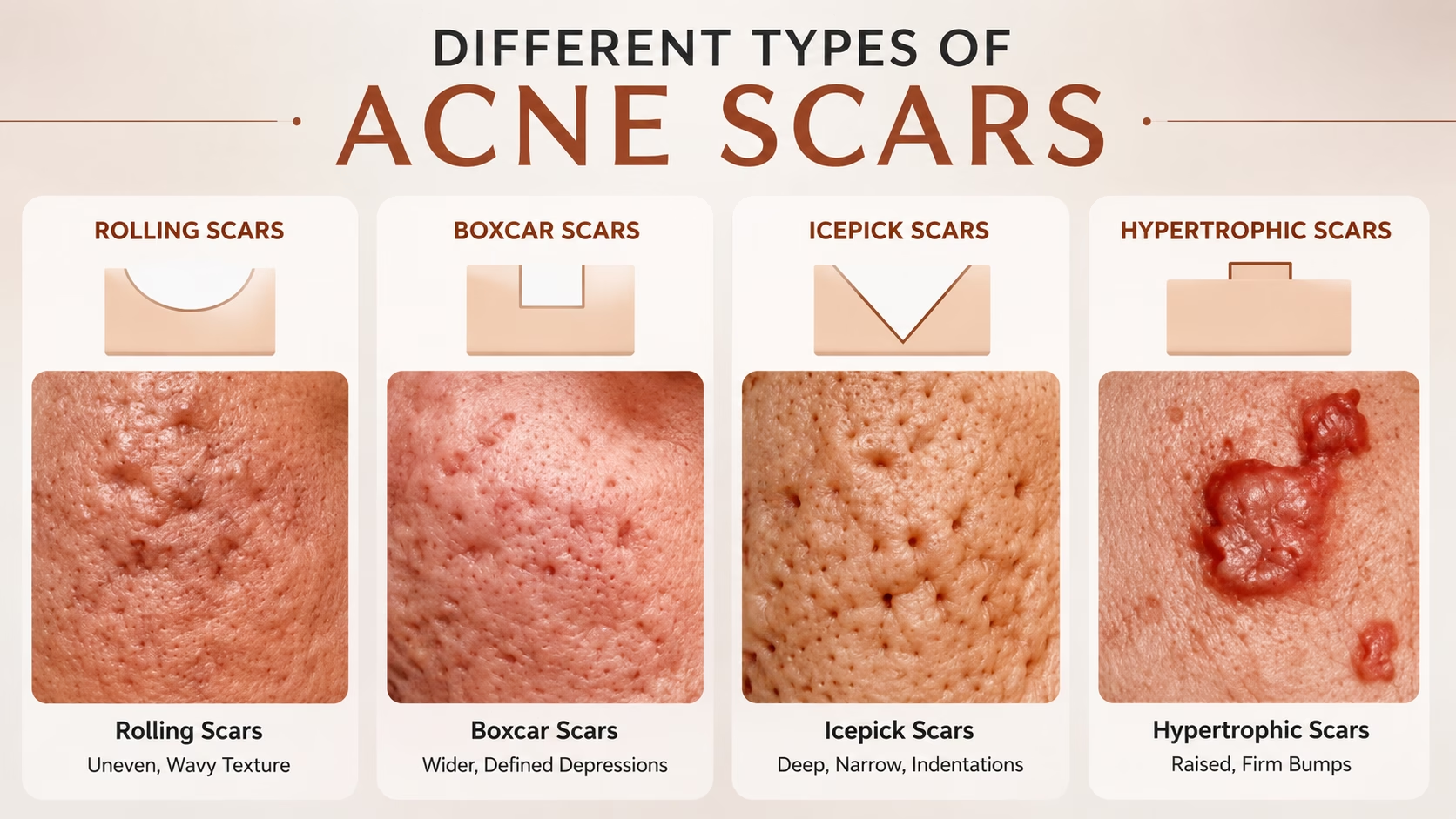
Table of Contents
Direct Answer
Some acne scars are actually distinct. Scars vary depending on the type: ice pick, boxcar, rolling, hypertrophic and keloid scars all have different scarring mechanisms and treatment requirements. The first step is to correctly identify the type of acne scar you have, so you can choose an effective treatment. Scars are evaluated for depth, skin texture, collagen loss and skin type before recommending any procedures including microneedling, subcision, laser resurfacing, TCA CROSS, PRP or chemical peels.
TL;DR
- Acne scars are permanent marks left behind by inflammatory acne.
- Acne scars can come in five different forms.
- Each scar is unique and will react differently to treatment.
- Ice pick scars tend to be the deepest.
- Rolling scars will frequently need subcision.
- Laser or microneedling often works great on boxcar scars.
Acne treatment at an early stage will avoid permanent scarring.
What is acne scar?
Acne scars are scars formed when the collagen of the skin is damaged in the process of healing of inflammatory acne. Acne scars are different from acne marks, which are flat and may fade with time, and they change the texture of the skin. The key is to identify the scar type, as each type of scar can be treated with different dermatology procedures.
A lot of patients think that all acne scars are the same. In the clinical context or acne scar treatment term, however, the size, depth and underlying etiology of the scar dictate the best treatment plan.
What causes acne scars?
Acne scars are caused when inflammation reaches the deeper layers of skin and interferes with the production of collagen.
Some common risk factors are:
- Severe acne
- Cystic acne
- Nodular acne
- Delayed acne treatment
- The process of extracting or squeezing pimples
- Genetics
- Hormonal acne
- Recurrent inflammatory breakouts
Acne scars can come in several different forms
Ice Pick Scars
Ice pick scars are thin and deep and penetrate to the dermis. They look like pinhole-sized holes that have been punched through and are among the toughest acne scars to treat.
Characteristics
- Less than 2 mm wide
- Deep V-shaped appearance
- Most often found on the cheeks
- It is a common occurrence that the acne turns into cysts.
Best Treatments
- TCA CROSS
- Fractional CO₂ Laser
- Punch Excision
- Combination Therapy
Also Read: Best Laser Therapy Clinic for Acne Scars in Dubai & Sharjah
Boxcar Scars
The boxcar scars are circular or elliptical, deep ones with well-defined edges. They are bigger than ice pick scars and often appear following inflammatory acne.
Characteristics
- Broad depressions
- Well-defined borders
- Mild to deep
- Found on cheeks and on temples.
Best Treatments
- Microneedling for scars
- RF Microneedling
- Fractional CO₂ Laser
- Chemical Peel
- PRP Combination Therapy
Rolling Scars
Rolling scars cause the skin to make waves because fibrous bands stretch and pull the skin down. They tend to cause uneven skin tone in natural light.
Characteristics
- Soft sloping edges
- Wavy appearance
- Generally, more than 4 mm in width
- The skin appears to be uneven from various viewpoints.
Best Treatments
- Subcision
- Microneedling
- RF Microneedling
- Dermal Fillers for scars
- PRP
Hypertrophic Acne Scars
Hypertrophic scars are raised scars that result from over production of collagen during healing. They protrude above the skin surface, while atrophic scars are below.
Characteristics
- Thick
- Raised
- Firm
- Typically, do not penetrate beyond the boundaries of the existing acne lesion.
Best Treatments
- Steroid Injections
- Silicone Gel
- Laser Therapy
- Cryotherapy (selected cases)
Keloid Acne Scars
Keloids happen when there is continued production of collagen after healing and beyond the acne lesion.
Characteristics
- Large raised scars
- Extend outside the original wound
- These are found commonly on the chest, shoulders, the jawline and the back.
- More likely to occur in darker skin tones
Best Treatments
- Corticosteroid Injection
- Laser Therapy
- Silicone Therapy
- Combination Treatment
Macular Acne Scars (Post-Acne Red Marks)
Macular scars are red or pink spots that have formed after the acne inflammation. Not true scars as skin is still smooth.
Characteristics
- Flat
- Red
- Pink
- No collagen loss
Common Treatments
- Sunscreen
- Azelaic Acid
- Chemical Peel for scars
- Vascular Laser
Post-Inflammatory Hyperpigmentation (PIH)
PIH is brown, grey or dark patches that will show up after acne has healed. It is sometimes referred to as “acne scars,” but, really, it’s a buildup of excess pigment and not actual scars.
Characteristics
- Brown spots
- Flat skin
- The darker the skin tone, the more prevalent the condition is.
- Gradually fades
Best Treatments
- Chemical Peels
- Retinoids
- Vitamin C IV Drip
- Tranexamic Acid
- Sunscreen
Acne Scar Types Comparison
Scar Type | Texture | Depth | Usually Fades Naturally | Common Treatment |
Ice Pick | Deep hole | Deep | No | TCA CROSS, CO₂ Laser |
Boxcar | Sharp depression | Moderate | No | Microneedling, Laser |
Rolling | Wave-like | Moderate | No | Subcision |
Hypertrophic | Raised | Surface | Sometimes | Steroid Injection |
Keloid | Raised beyond wound | Thick | Rarely | Steroid + Laser |
Macular | Flat Red | None | Usually | Skincare |
PIH | Brown Flat Spot | None | Often | Chemical Peel |
What is the Difference Between Acne Mark vs Acne Scar?
Acne marks are often mistaken for acne scars.
Acne Marks | Acne Scars |
Flat | Uneven texture |
Temporary | Permanent without treatment |
Pigment problem | Collagen problem |
Fade naturally | Usually require dermatology procedures |
What are the different ways dermatologists find out what the types of acne scars are?
During a skin exam, dermatologists evaluate the depth of the scar, its texture, collagen loss, skin color, and the distribution of the scar. If the diagnosis is correct, the right choice of treatment can be made and unnecessary procedures can be avoided.
Your dermatologist might inspect:
- Scar depth
- Skin thickness
- Active acne
- Pigmentation
- History of skin cancer in the family
- Previous acne treatments
There is a risk of pigmentation after inflammation.
Also Read: How Acne Scar Specialist Treat the Condition? Learn
May I have a mix of acne scars?
Yes. Most sufferers don’t have one type of acne scarring; they have a combination of them. For instance, common to see ice pick scars on the cheeks, rolling scars on the temples and boxcar scars on the face. Typically, combination treatment plans yield the best outcomes.
Common Mistakes that Patients Make
In fact, this is the most common mistake people make when treating acne acne scars.
- Purchasing costly creams for deep scars
- Seeking treatment for scars while having acne still going on
- Picking pimples repeatedly
- Why not avoid using a sunscreen after procedures?
- They hope that one treatment will take care of all the scars.
With the expert guidance by Glow Specialist.
A diagnosis of the scar type is one of the most crucial steps in the treatment process before considering treatment for an acne scar, and will help to determine the best long-term results from treatment regardless of the type of acne scar a patient may have.
Also Read: Find Acne Scars Dermatologist who are Top in Dubai
Conclusion
There are different types of acne scars; including ice pick scars, boxcar scars, rolling scars, hypertrophic and keloid scars, post-acne marks. Knowing which type of scar you are dealing with is the key to determining the best form of treatment. Mild discoloration may heal with the use of skincare; however, acne scars typically require collagen remodeling techniques such as microneedling, RF microneedling, fractional CO₂ laser, subcision, TCA CROSS, PRP, or chemical peels. It is important to seek help from a dermatologist if your scars are affecting your confidence or if they continue to get worse. Early prevention of acne and not picking pimples are the best ways to prevent scars.
FAQs About Different Types of Acne Scars
- What is my type of acne scar?
This will depend on the texture of your skin and the formation of the scar. Ice pick scars are deep and narrow; boxcar scars are sharp-edged while rolling scars appear as wavy depressions.
- Which is the most difficult to treat acne scar?
Ice pick scars are typically more difficult to treat as they penetrate deeper into the skin layers. They tend to be treated with methods such as TCA CROSS, punch excision, and fractional CO₂ laser, not just creams.
- Are acne scars permanent?
True acne scars tend to be permanent and will not get better without treatment. Procedures by dermatologists can help to improve their look through encouraging collagen production.
- Do acne scars go away on their own?
Acne scars are unlikely to heal on their own. Flat acne marks will fade eventually, but textured acne scars which are a result of collagen damage are less likely to go away on their own.
- How are acne scars different from marks?
The main difference is that scars influence the skin texture, and marks influence the skin color.
- Which is the best treatment for rolling scars?
Subcision is one of the best treatments for rolling scars since it helps release the fibrous bands which cause pulling of the skin in a downward direction. It can be used along with microneedling or PRP.
- Does microneedling work on all acne scars?
Microneedling helps in improving many types of atrophic acne scars, however, it is not always the best solution. It performs well on mild to moderate boxcar and rolling scars.
- Which is the best laser for acne scars?
There are various types of lasers which help in treating acne scars, and the best one can be chosen by the patient based on his/her scar type. The most commonly suggested one is fractional CO₂ laser.
- Can a person develop different types of acne scars?
Yes. Mixed acne scars are very common among many people. They can have ice pick, rolling, and boxcar scars.
- What causes some pimples to scar, while others do not?
Increased inflammation leads to the increased chances of scarring. Cystic acne, untimely intervention, genetic predisposition, and picking of pimples lead to collagen damage, resulting in acne scars.
- Whom should I see for my acne scars?
Board-certified dermatologists are the best doctors to visit for the assessment of different types of acne scars and provision of scientifically-proven treatment options, including laser resurfacing, microdermabrasion, and subcision.
- Do acne scar creams get rid of deep scars?
No. Topical creams cannot help regenerate damaged collagen in deep acne scars. Although prescription creams can help with pigmentation or skin texture, procedures would be required to get significant results.
- Is there an increased chance of developing scars on oily skin?
Oily skin per se does not cause scars. People with oily skin can have severe cases of acne that result in inflammatory lesions causing scars.
- What are some methods that could help prevent acne scars?
Get acne treated on time and never pick your pimples. This is the best way to avoid getting acne scars.
- Is there any chance that the scars will appear again even after being treated?
The improved skin condition is unlikely to be repeated, but acne itself may cause new scars. It is important to keep acne under control.
Medically Reviewed Skincare Advice
 12+ Years Experience
5,000+ Patients Treated
Dermatology & Aesthetic Skin Therapist
 12+ Years Experience
Get Free Consultation Now!
+971 - 56 548 7001